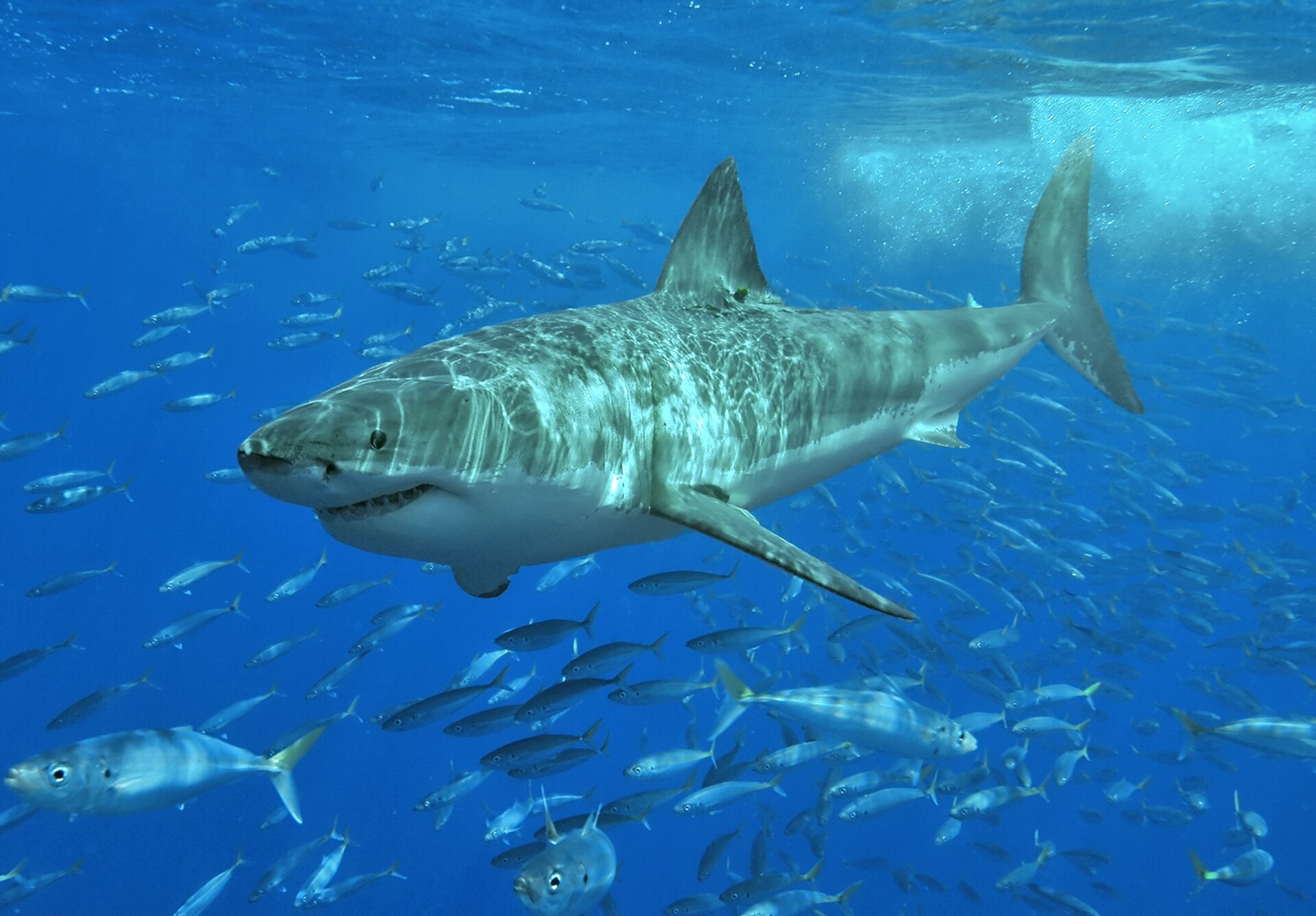
If you've been paying attention to shark tracking maps lately, you might think Florida is under siege.
Massive great white sharks seem to be showing up everywhere. Social media is flooded with satellite tracking updates, viral videos, and reports of enormous predators cruising just off Florida's coastline. It certainly feels like the Sunshine State is seeing an explosion of great white sharks.
But are we really? The answer is both yes… and no.
We Are Finally Watching
Over the past several years, marine researchers have dramatically expanded their ability to track great white sharks using satellite transmitters. Organizations like OCEARCH and university researchers have tagged far more sharks than ever before, allowing scientists to watch their migrations in real time.
As a result, we're seeing something we've never been able to see before. Many of these sharks spend part of the winter in and around Florida's Atlantic coast, the Florida Straits, and even portions of the Gulf of Mexico before migrating north as water temperatures rise. While this may seem like a new phenomenon, scientists now believe these seasonal migrations have likely been occurring for decades—we simply didn't have the technology to witness them.
Think of it like turning on the lights in a dark room. The room didn't suddenly become full of furniture—you just gained the ability to see what was already there.
A Population That Recovered
That doesn't mean great white populations haven't improved. Thanks to conservation efforts and fishing regulations over the last few decades, researchers believe the western North Atlantic great white population has recovered compared to historic lows. Healthier populations naturally mean more sharks surviving to adulthood and continuing their annual migrations.
So yes, there may be somewhat more great whites today than there were 30 years ago. But the dramatic increase in sightings is driven primarily by better science, better technology, and significantly more tagged sharks providing real-time location data.
What It Means for Swimmers
Despite the attention-grabbing headlines, great white sharks are not the species responsible for most shark bites in Florida. Most encounters involve smaller coastal species such as blacktip, spinner, or bull sharks. Great whites generally spend much of their time offshore and rarely interact with swimmers.
Even more reassuring, fatal shark attacks remain extraordinarily rare. In Florida, the odds of being seriously injured by a great white shark are incredibly small, and fatal shark bites account for less than 1% of all reported shark bite incidents.
So the next time you see a headline claiming that great white sharks are “taking over” Florida, remember what's really happening. We're not witnessing an invasion. We're witnessing one of the greatest advances in marine science—one that is finally allowing us to understand the incredible journeys these magnificent predators have been making all along.